Trezor Suite (Official) | Trezor Suite App - Trezor™
Securely manage your cryptocurrency — desktop and web app crafted by SatoshiLabs for hardware wallet users. Trezor Suite brings account management, portfolio overview, fiat conversions, coin support, and advanced transactions into a single privacy-first interface.
What is Trezor Suite?
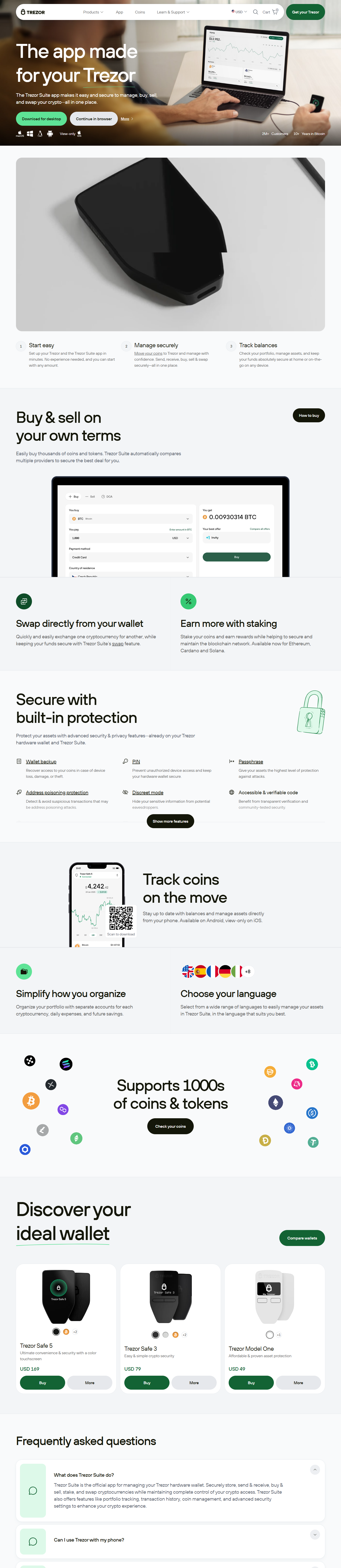
Trezor Suite is the official app interface for Trezor™ hardware wallets. It is designed to keep your private keys offline on your device while offering a modern, user-friendly dashboard to send, receive, and manage crypto assets. Because the sensitive signing happens on the physical device, Suite functions as a secure bridge between your offline keys and the internet — giving you the convenience of software with the security of hardware.
Who should use it?
Trezor Suite is ideal for:
- Holders of Bitcoin, Ethereum and supported altcoins who want a single place to monitor portfolio and trade safely.
- Users who value privacy — Suite minimizes data sent to third parties and lets you connect to your own node if desired.
- Advanced users who need multisignature, coin control, and exportable transaction data for accounting or tax purposes.
Key features
Secure Signatures
All transactions are signed inside your Trezor device. The Suite app communicates unsigned transactions, and only the device holds the secret keys — even if your computer is compromised.
Portfolio & Balances
View balances across multiple accounts, get historical portfolio charts, and convert balances to your preferred fiat currency in real time.
Coin Support
Trezor Suite supports Bitcoin, Ethereum, many ERC-20 tokens, and a large selection of altcoins. The list grows over time — see the official compatibility list on trezor.io.
Advanced Transaction Controls
Customize fee levels, use coin control for UTXO selection, and preview every detail on-device before approving a transaction.
Privacy & Own Node
Connect Suite to your own Bitcoin or Electrum server for maximum privacy. By default Suite uses privacy-respecting backends and minimizes telemetry.
Backup & Recovery
Use the original recovery seed (24 words recommended) to recover funds on a new device. Suite includes guided backup checks and recovery tools.
Getting started — quick setup
Follow these steps to set up Trezor Suite with your device:
- Download Trezor Suite from the official website (
trezor.io/start) and install it on your desktop or open the web app in a private browser window. - Connect your Trezor device via USB and follow on-screen instructions. If this is a new device, initialize it and create a new seed. If you already have a seed, choose Recover a wallet to restore.
- Create a strong device passphrase (optional but recommended) and write down the recovery seed on the provided recovery card. Never store the seed digitally.
- Once initialized, Suite will detect supported coins and synchronize your accounts. Add accounts for the assets you want to manage.
Tip: always verify the firmware version on-device and only install firmware updates obtained through Suite. The app will detect official firmware signatures to prevent tampering.
Using Trezor Suite — essential workflows
Receive
To receive funds, open the account for the desired coin, click Receive, and verify the receiving address on your Trezor device screen before sharing it. This prevents address substitution attacks from a compromised host computer.
Send
To send, create a new transaction in Suite, set amount and destination, adjust fee settings if needed, then confirm the full transaction details on your Trezor device (amount, destination, and fees) before approving. Suite displays useful fee suggestions and estimated confirmation times.
Exchange & Swap
Suite integrates with selected on-ramp and swap partners. When using third-party services always verify partner details, and remember that swapping moves control to a counterparty until the trade completes — treat it like any other exchange interaction.
Advanced: Coin control & UTXO management
For Bitcoin power users, Suite exposes UTXO selection and change address settings. Use these tools to consolidate dust, manage privacy, or prepare specific outputs for multisig setups.
Security best practices
Your Trezor's security depends on both the hardware and how you use it. Follow these guidelines:
- Never share your recovery seed. The 12/24-word seed is the key to your funds — keep it offline on paper or a metal backup.
- Confirm addresses on-device. Always verify receiving and sending addresses on the Trezor screen, not on your computer.
- Use official downloads. Only download Suite from trezor.io to avoid counterfeit installers. Check the website's HTTPS certificate and hashes when prompted.
- Enable a passphrase. Passphrases add a second factor that can create a hidden wallet. Treat them like additional secret words and never forget them.
- Keep firmware updated. Install firmware updates through Suite and follow prompts. Firmware updates improve compatibility and security but verify authenticity first.
- Use a metal backup for seeds. Paper can degrade; consider a stamped or engraved metal backup for long-term durability.
Privacy & data handling
Trezor Suite was built with privacy in mind. By default it minimizes telemetry, and you can opt to connect Suite to your own nodes. When using Suite:
- Opt out of analytics if you prefer full anonymity.
- Use Tor or VPNs at your discretion for extra network privacy, but be aware of trade-offs and latency when broadcasting transactions.
- Consider separate accounts for different purposes to reduce on-chain linkability between activities.
Troubleshooting & FAQs
My device isn't recognized — what now?
Try a different USB cable and port. Ensure Suite has permission to access the device. Reboot your computer and, if necessary, reinstall Suite from the official site. If problems persist, check the Trezor Support pages for platform-specific fixes.
I lost my recovery seed — can I get my coins back?
Without the recovery seed or access to the device with its passphrase you cannot recover funds. Trezor cannot help restore lost seeds. This is why secure seed backup is critical.
Can I use Suite on multiple computers?
Yes. Your accounts are derived from the recovery seed stored on your device, so connecting the same Trezor to Suite on another computer will show your accounts after synchronization.
Is Suite open source?
Yes. Key components of Trezor's software are open source. Visit the Trezor GitHub repository to review the code and contributions.
Advanced tips
- Use hidden wallets with passphrases for plausible deniability and compartmentalization of funds.
- Connect Suite to your own Bitcoin Core or Electrum server to avoid reliance on third-party backends and maximize privacy.
- For tax reporting, export transaction history as CSV from Suite and import it into tax software or spreadsheets.
- If you manage large holdings, consider multisignature setups — combine Trezor with other hardware wallets for enhanced security.
Download & resources
Always download Trezor Suite from the official website: trezor.io/start. Useful resources:
- Official Trezor documentation and setup guides
- Trezor GitHub for source code and developer resources
- Trezor Support center for troubleshooting and warranty info